Watch Knowledge
How to Measure Your Watch's Lug Width
The single most important number when buying a replacement strap — and the three ways to find it accurately.
· 2 min read
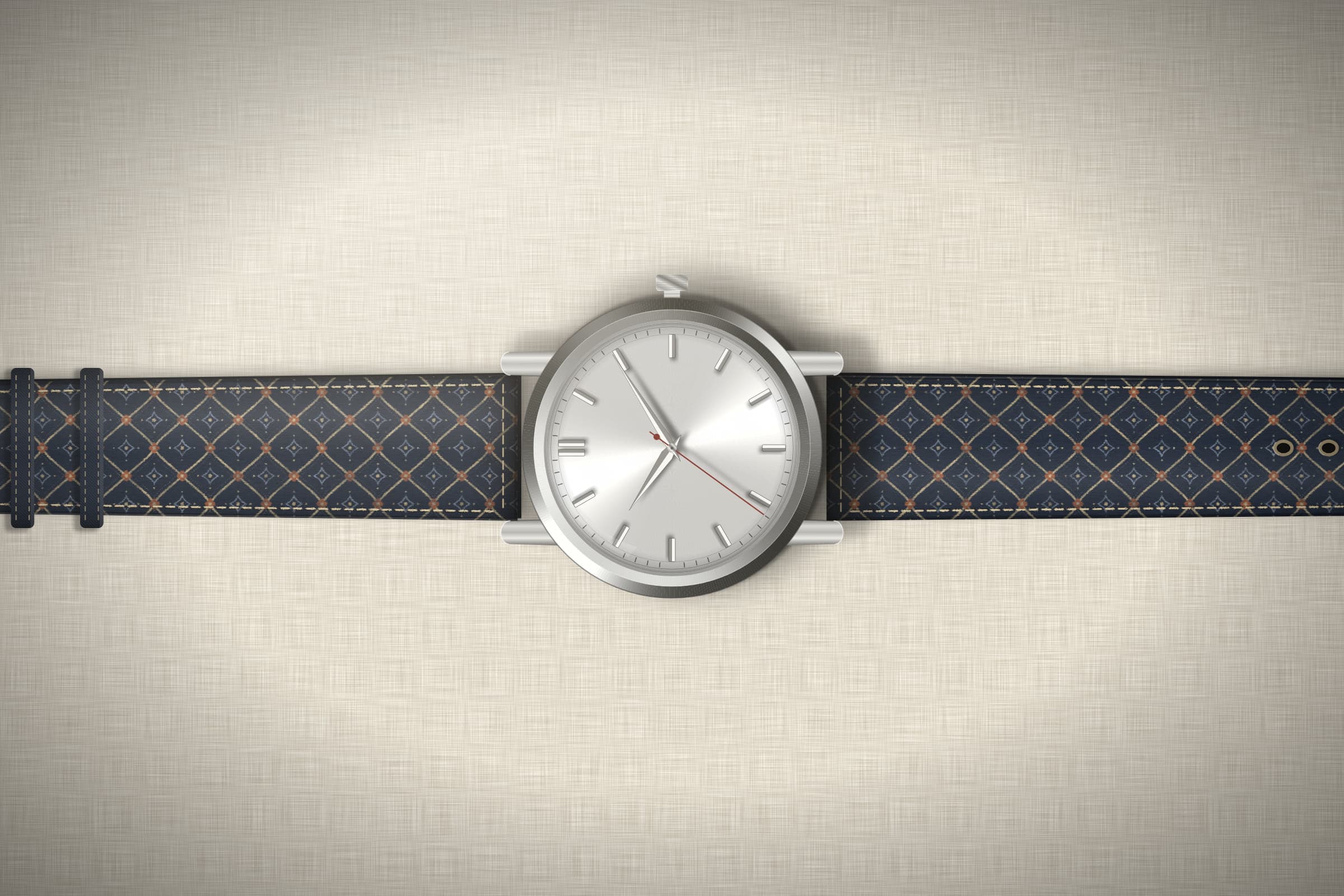
Lug width is the distance between the inside faces of a watch's lugs — the two pairs of "horns" that extend from the case and hold the strap. It is measured in millimetres, and it is the measurement a replacement strap must match.
A strap that is too narrow leaves a visible gap and can shift on the spring bar. A strap that is too wide will not fit between the lugs at all, or will bunch and strain the spring bars. A difference of a single millimetre matters.
Method one: check the manufacturer's specifications
Many watchmakers publish the lug width (sometimes called "band width" or "strap width") in the product specifications or the instruction manual. If you know your exact model reference — usually printed on the caseback or on the warranty card — this is often the quickest route. Use the specifications for your precise reference: different versions of the same model line can have different lug widths.
Method two: measure between the lugs
You will get the most reliable reading with a set of digital or vernier calipers. A good millimetre ruler works if you are careful.
- Lay the watch face-up on a soft cloth.
- Place the jaws of the calipers (or the ruler) between the inside faces of the two lugs at one end of the case.
- Measure as close as possible to where the spring bar sits, not at the very tips of the lugs, which may be shaped or bevelled.
- Read the result in millimetres and repeat at the other end of the case.
Most results land on an even number — 18, 20 or 22 mm are the most common widths on men's watches; 12, 14 and 16 mm are common on smaller watches. Odd sizes such as 19 mm and 21 mm do exist, particularly on dress and vintage watches. If your reading is close to a half millimetre, measure again rather than rounding by guesswork.
Method three: measure the existing strap
If your current strap is still attached, measure its width right where it meets the case. This should equal the lug width. Avoid measuring further down the strap: most straps taper towards the buckle, so the width there will be smaller.
Lug width is not the whole story
Matching the width is necessary, but it does not guarantee a fit. Before ordering any replacement strap, check:
- The attachment system. Our straps are designed for standard spring-bar lugs. Watches with integrated bracelets, proprietary connectors, screw-in bars or unusual case shapes may not accept a standard two-piece strap.
- Clearance. A thicker strap needs room between the spring bar and the case. Some cases with very tight lug-to-case gaps work better with thinner straps.
- Curved lugs and end links. A case designed around a curved bracelet end link can leave a gap with a straight-ended strap.
If you are unsure, ask us before ordering and include your watch model and a clear photograph of where the strap attaches. We would rather check than have you guess.
Our size guide includes an interactive helper for interpreting your measurement.
Find a strap that fits.
Explore the collectionFurther reading
All stories
Leather vs Fabric Watch Straps
Two very different materials, each with its own strengths. An honest comparison.
A Beginner's Guide to Mechanical Watches
Mainsprings, escapements and why a watch without a battery keeps running.
The Art of Sanganeri Printing
Fine florals, careful registration and a town just south of Jaipur — an introduction to one of Rajasthan's best-known textile traditions.